
Tankless water heaters in Union City, Fulton County
Union City, GA Tankless Water Heater Services for Homeowners Weighing a Switch From a Tank
The tank heater is failing, or you are tired of running out of hot water in the middle of a shower. A tankless unit heats water as it flows instead of storing it, which changes what a home has to supply: gas, venting, electricity and room on the wall.
Call Union City GA Plumbing Pros, tell us what you have now and what you want from the change, and you will hear what to check before you commit.
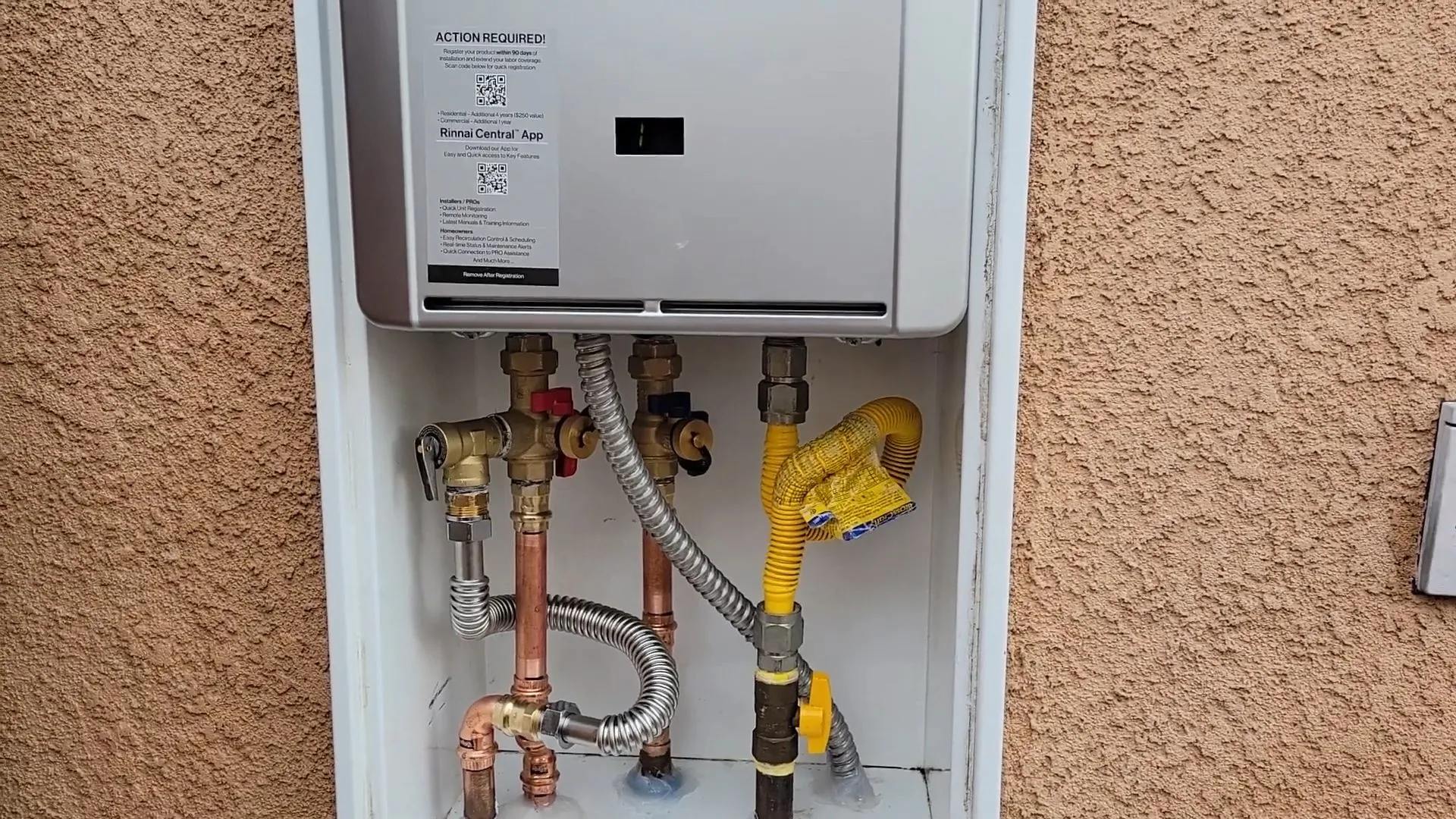
Will a tankless heater fit my house?
Tankless units are not a drop-in swap for a tank. They need more of the house, not less. Four items decide whether the switch is simple or a larger project.
| What it needs | Why it matters | Ask the plumber |
|---|---|---|
| A larger gas line (gas models) | A tankless unit burns a lot of gas at once | Is the existing line big enough, or does it need replacing? |
| A new vent | Many tankless units vent differently from a tank | What vent type, where does it exit and what clearance is needed? |
| Electricity | Controls and fans need power, and electric units need a high-capacity circuit | What circuit is required, and can the panel supply it? |
| Wall space | Units mount on a wall, usually in a garage or a utility room | Where will it go, and what clearance does it need? |
A quote that does not mention these four items is not a full quote. Ask for each to be listed.
Does tankless really mean endless hot water?
A tankless heater does not run out the way a tank does, but it has a limit on how much it can heat at once. That limit is the flow rate, measured in gallons per minute. If two showers and a dishwasher run together, a unit that is too small will cool down.
Ask the plumber to size the unit to your household, not just to the number of bathrooms. Describe when hot water is used at once and which fixtures draw the most.
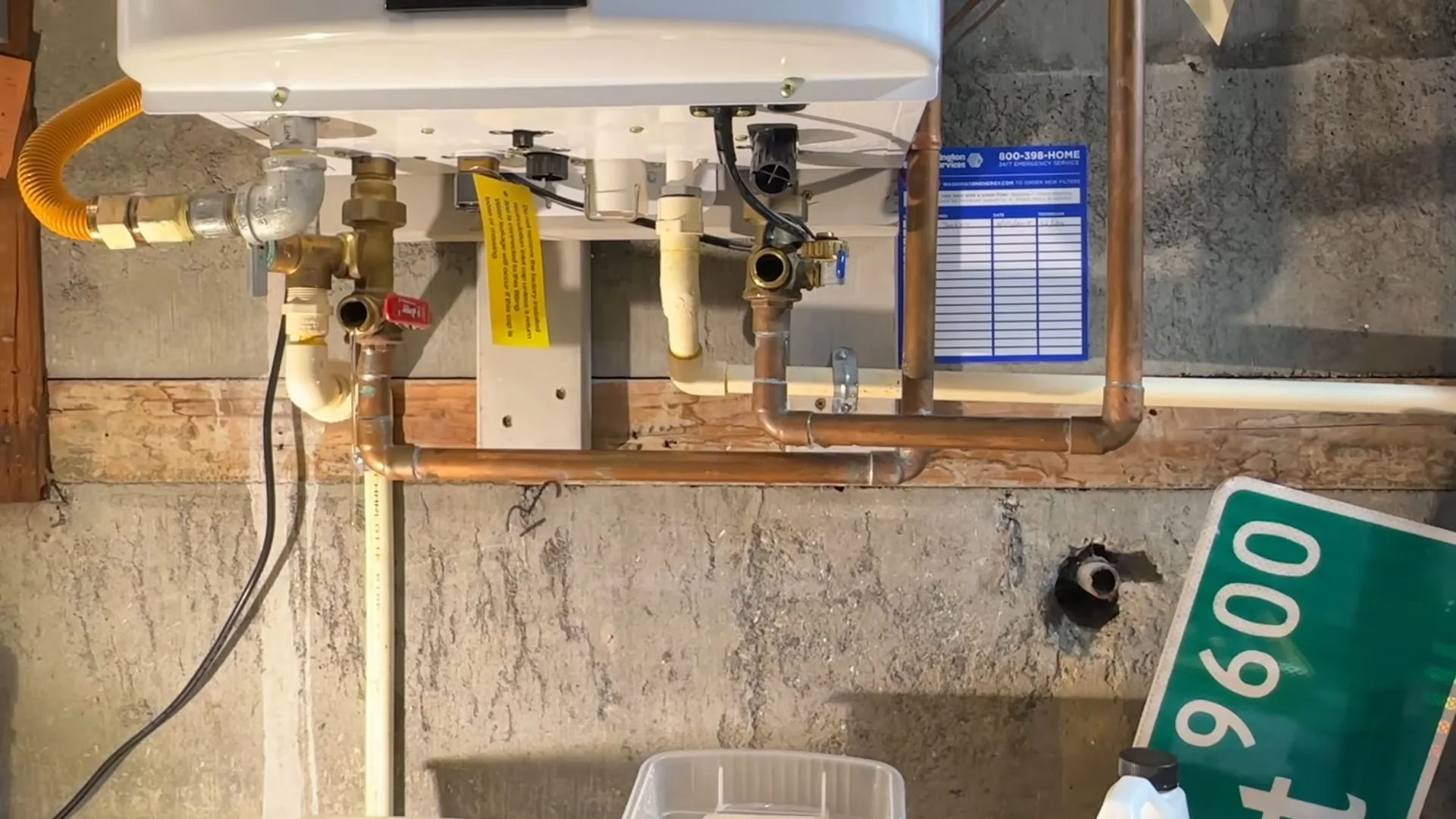
Gas or electric tankless?
- Gas models deliver more flow but need a gas supply, a vent and combustion air.
- Electric models avoid venting but draw a large amount of current, and many homes need a panel upgrade.
- Existing connections matter. A home already piped for gas has a head start on a gas unit.
- Running costs vary with gas and electricity rates. Ask for a comparison based on current rates, not on a general claim.
If you smell gas at any point, leave the house and call 911 or your gas utility from outside. A gas smell is not a plumbing check.
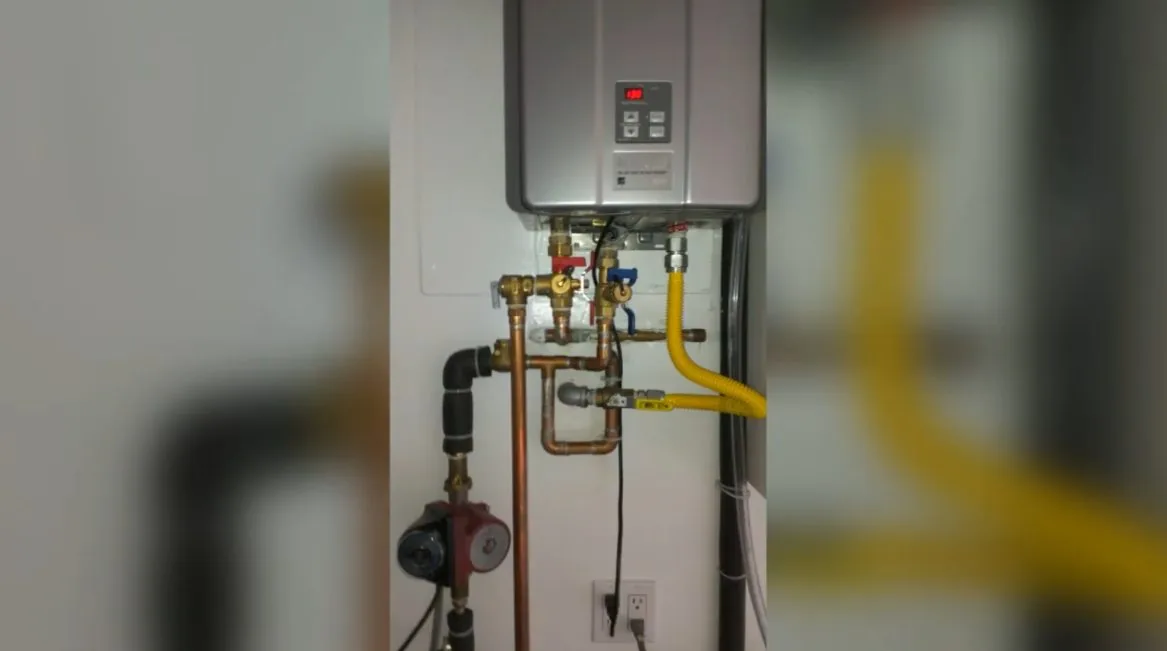
Undersink and point-of-use units
A small point-of-use unit sits under a sink and heats water for that one fixture. It suits a distant kitchen or bath where hot water takes a long time to arrive, or a space with no room for a larger heater.
- It supplies one fixture, not the house.
- Most are electric and plug into a standard outlet or a dedicated circuit.
- It does not replace a main water heater.
- Ask about the flow it can sustain, since some small units supply only a trickle.
Tankless upkeep: descaling and heat exchanger mineral buildup
Tankless units need periodic service. Mineral buildup can form inside the heat exchanger, and some manufacturers call for descaling at set intervals. We have not found a published hardness figure for Union City water, so ask the plumber what interval the maker specifies for your unit and what it depends on.
Ask what is covered by the warranty and what voids it. Many warranties require documented maintenance. Keep the paperwork.
Temperature swings and the cold water sandwich
Some people notice a burst of cold water between two uses of hot water. The unit shuts off when the tap closes and needs a moment to fire again, so a short pause can let cold water reach the pipe. It is a known trait of tankless units, and the effect varies by model and installation.
Ask the plumber how the model handles short, repeated draws, and whether a small recirculation arrangement is an option. If you often run hot water in short bursts, such as rinsing dishes, this question matters.
Will a tankless heater work during a power outage?
Most tankless units, including gas ones, need electricity for controls, fans and ignition. When the power goes out, they do not heat, and a tank heater with a pilot may keep working. If outages concern you, ask the plumber about the unit's power needs and what a backup would take.
- What flow rate does the model deliver at our incoming water temperature?
- What is the minimum flow before the unit fires?
- What clearances and vent routes does the installation need?
- What happens to hot water during an outage?
Permit and paperwork
The city's permit page says permits are issued to the certified contractor, under the 2018 International Plumbing Code with Georgia amendments. Replacing a tank with a tankless unit changes the gas, vent and electrical work, so ask who pulls the permit and which inspections follow.
Georgia plumbers are licensed through the Georgia Construction Industry Licensing Board, Division of Master and Journeyman Plumbers. Ask for license details before work begins.
Tankless or a new tank: how to choose
The honest answer depends on your house. If gas line size, venting and space are all easy, tankless may be a smooth switch. If they are not, a new tank can be the simpler fit. Read about replacing with a new tank and compare.
If your current heater just stopped working, ask whether a repair would hold, and read about repairing a failing tank heater before you commit to the larger project. If you rent, the choice is the owner's.
Describe your heater, fuel and hot water use for a first check
Describe your heater, your fuel and how many people use hot water at once, and you will hear what to check first. Ranges for installations are listed on the tankless water heater cost page.