
Slab leaks in Union City, Fulton County
Union City, GA Slab Leak Detection and Repair for Warm Floors and Running-Water Sounds
The house is quiet, yet you can hear water running. One part of the floor feels warm under your feet, or the bill keeps climbing with nothing visibly wrong. Those signs can point to a pipe leaking under the concrete slab.
Call Union City GA Plumbing Pros, describe what you notice and where, and you will hear whether it sounds like a slab problem and what to check first.
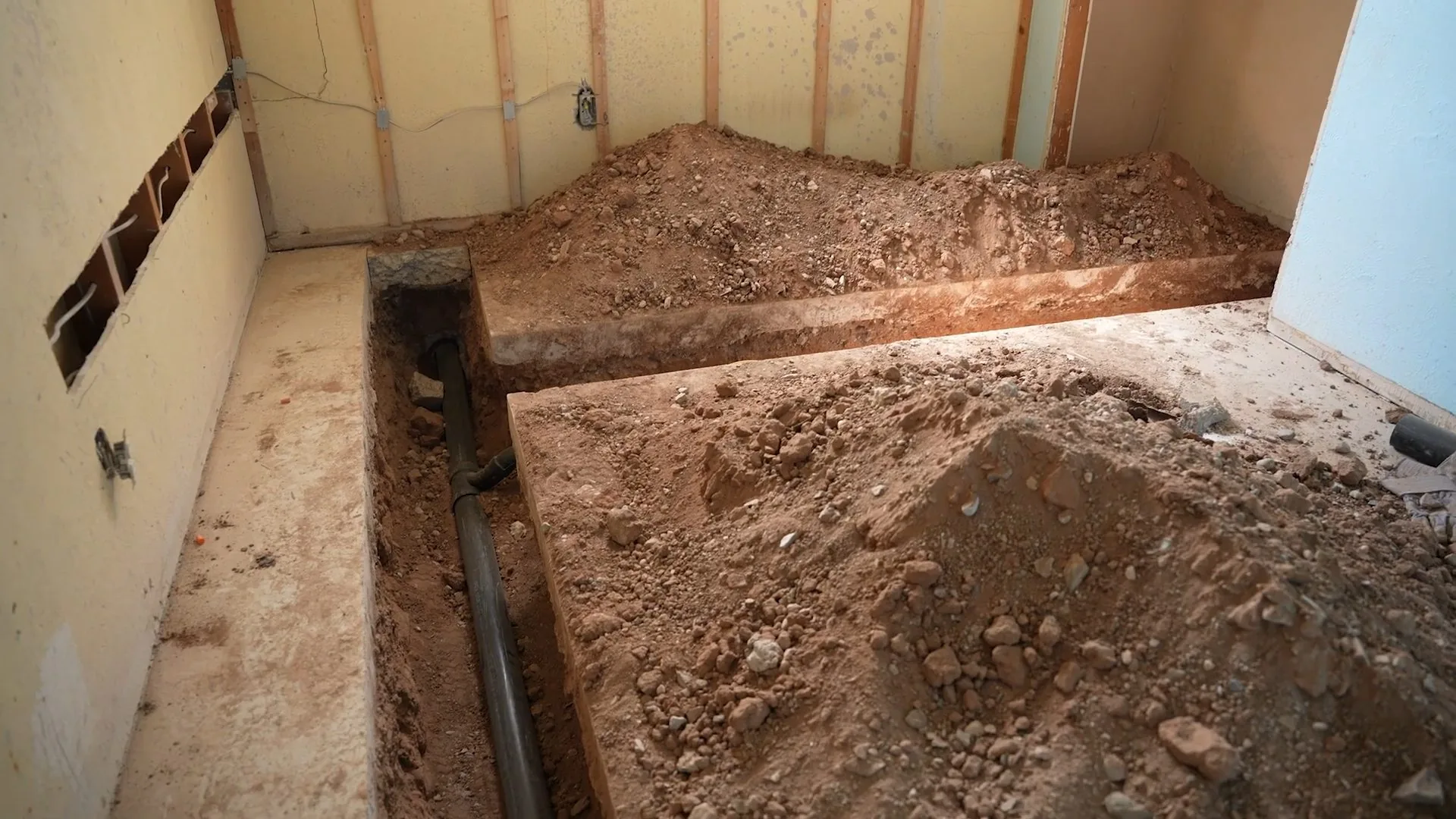
I hear water running but see no leak. Could it be under the slab?
It can be, but sound alone is a weak clue. A toilet filling slowly, an ice maker or a failing valve can all hiss in a quiet house. The way to separate them is to remove the household use first and see whether the sound and the meter still move.
If the sound continues with every fixture off, or if a hot water line feels warm through the floor, treat it as a possible slab leak and move to the meter test below.
Slab leak signs compared with look-alike causes
| What you notice | What else it could be | What helps tell them apart |
|---|---|---|
| A warm spot on a tile or hardwood floor | Sun through a window, a heating duct or a radiant element | Check at night with the heat off. A spot that stays warm points to a hot line |
| Running water heard with all fixtures off | A leaking toilet or a dripping valve | Toilet dye test, then the meter test |
| A bill that rises with no change in use | A leak anywhere on the property, or a change in habits | The meter test. A moving dial means a leak on your side |
| Damp carpet or floor covering along one wall | A plumbing fixture, a roof or a window leak | Look for a source above or beside the damp area first |
| A new crack, or a floor that has lifted | Normal settling or a structural issue | Do not assume a leak. Ask for the plumbing to be tested before anyone drills |
No sign in the table is proof. Together with a moving meter, though, they make the case for a professional assessment.
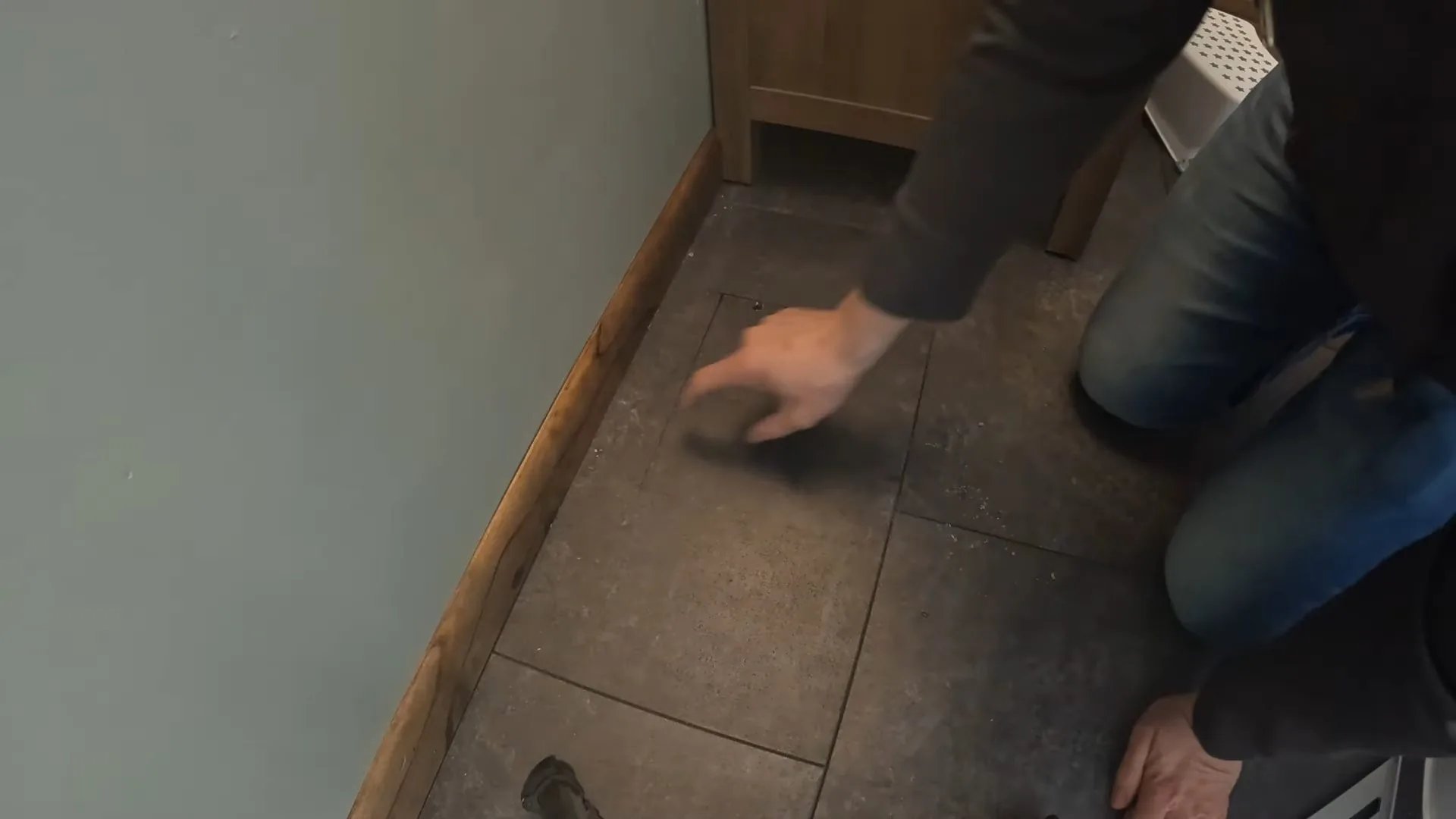
Meter test first, then ask for a slab assessment
- Turn off every tap and appliance that uses water.
- Find the meter box near the street and note the dial or leak indicator.
- Wait fifteen to thirty minutes without using water, then look again.
- If the dial moved, close the main shutoff inside the house and check again. A dial that stops points to a leak inside the house. A dial that still moves points to the line between the meter and the house.
The Union City Utility Division's utility FAQ says a moving dial with everything off means a leak on your side of the meter. For fuller steps, read the guide to finding a hidden water leak.
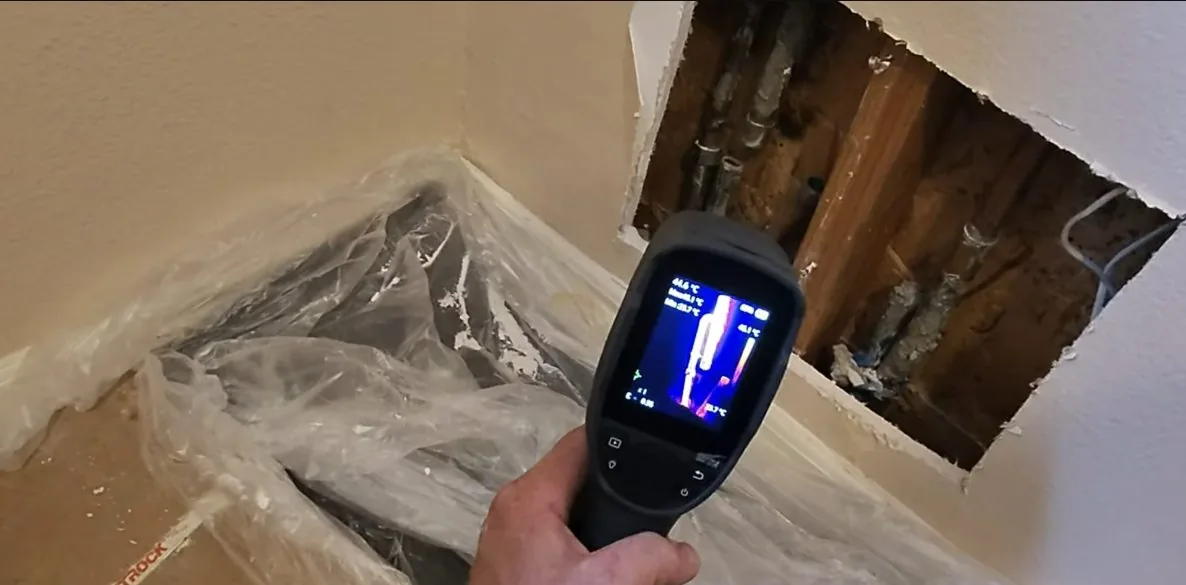
Does a slab leak threaten the foundation?
Water escaping under a slab can soften or wash away the soil that supports it. Whether that happens depends on how long the leak ran, how much water escaped and what the soil does when wet. Many slab leaks are repaired with no structural consequence, and some are not.
That makes it two questions. The plumber finds and fixes the pipe. A structural concern, such as a crack that is growing or a door that has begun to stick, belongs to a structural engineer or foundation specialist. A good plumber will say which question they are answering.
Do I even have a slab? What your foundation changes
A slab leak page only applies if your home sits on a slab. Homes over a crawlspace or a basement have different problems and different repairs. We have not found a verified source for how common slab foundations are in Union City, so check your own house instead of relying on a general claim.
- Walk the outside of the house and look at the foundation edge. A concrete edge flush with the ground often means a slab.
- Ask whoever sold or inspected the home, or check the inspection report.
- Ask the plumber to confirm before any quote is built around a slab repair.
If your home has a post-tension slab, the builder's documents or a scan will show it. Post-tension slabs contain tensioned cables, so nobody should cut or drill the floor without scanning to locate them first.
Three ways to fix a slab leak, and what to ask about each
| Approach | What it involves | Ask about |
|---|---|---|
| Spot repair through the slab | The floor is opened directly over the leak and the pipe is repaired | Who repairs the floor covering, and how far the opening will extend |
| Rerouting the line | The failed section is abandoned and a new line runs through walls or the attic | Which rooms are affected and whether the new route is accessible later |
| Replacing the line or the house piping | A longer run, or all supply lines, is replaced | How this compares with several smaller repairs. See repiping a whole house |
Spot repair is usually the smallest job when the leak is found and reachable. Rerouting avoids reopening the slab for the same line later. Which fits depends on where the leak is, how many leaks the line has had and what sits above it.
Permits, paperwork and insurance questions
The city's permit page says permits are issued to the certified contractor, under the 2018 International Plumbing Code with Georgia amendments. For work under or through the floor, ask who pulls the permit and what inspection follows.
Insurance is a separate conversation. Policies differ on whether they pay to reach a leak or only for the damage it caused, so read yours and ask your insurer before work starts. Whatever the answer, keep the leak report, the photographs and the invoices. If you rent, tell the owner or property manager first.
Call now or watch it a little longer?
Call now
- Water is visible at the floor, or the meter dial is racing
- You cannot shut the water off at the main valve
- Floor covering is swelling or lifting
Reasonable to book a visit
- A faint warm spot with a meter that moves slowly
- A bill that is higher than usual but stable
- Running-water sounds that stop when you use the main shutoff
If water has reached carpet, drywall or cabinets, the drying and cleanup are on the water damage restoration page. Stopping the leak comes first.
Tell us what the floor and the meter are doing
Describe the warm spot, the sound or the bill and you will hear whether it sounds like a slab leak. Ranges for typical jobs are listed on the plumbing cost ranges page.